Growing Guide: Daffodils
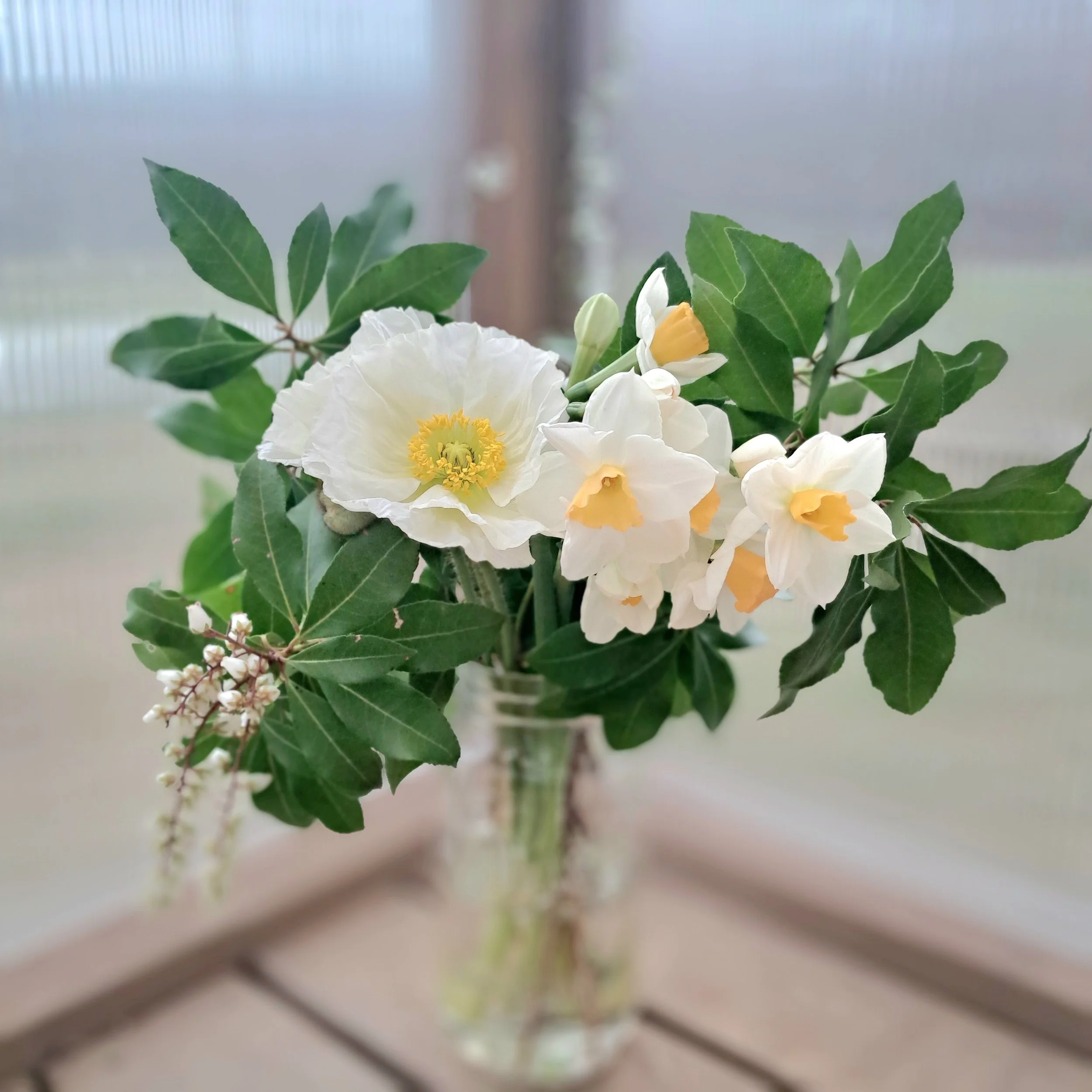
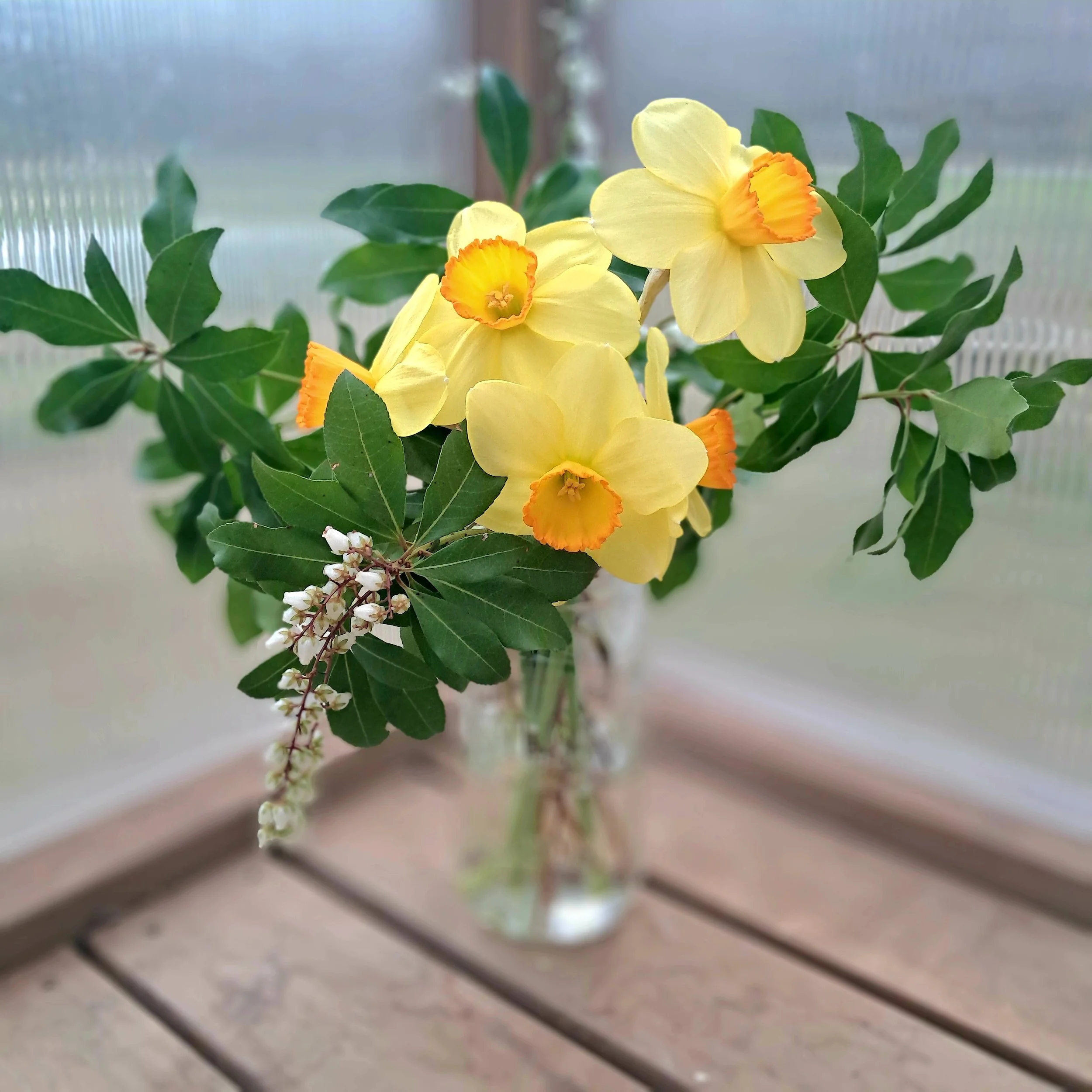
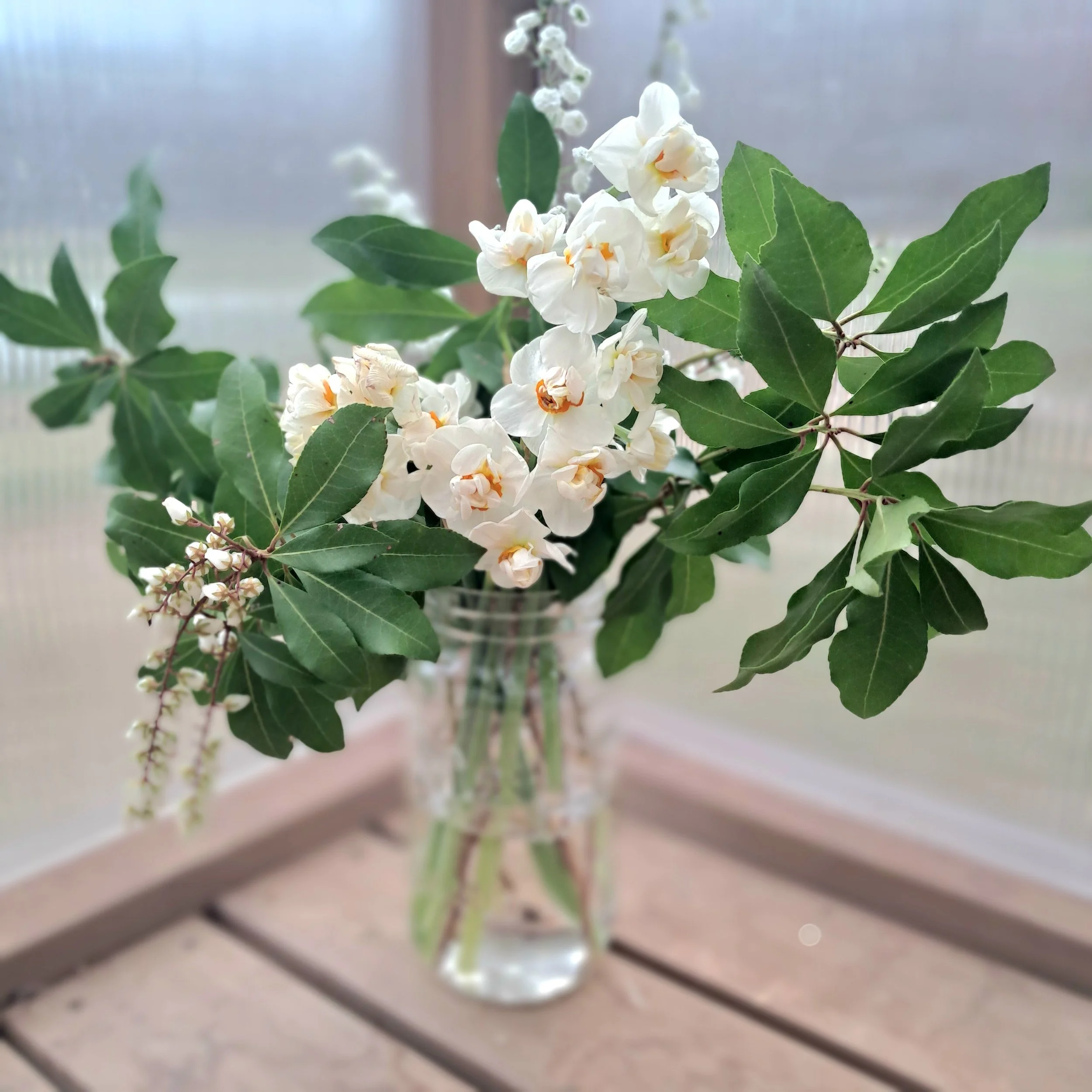
Daffodils are my favorite flowers. What’s not to like? They are easy to grow, come in dozens of varieties, replicate themselves, have a subtle scent, and are pest resistant. That said- having grown Daffodils for decades, I do have some strategies for success with these wonderful flowers.
Planting:
Plant Daffodils after the first frost in Fall, but before the ground freezes consistently. I plant Daffodils during Thanksgiving weekend each year and that works well- but I’ve planted as late as mid December and still had success. Plant Daffodils in holes 2-3x the height of the bulb in well draining soil that gets partial - full sun. Daffodils look really pretty under trees, I just recommend planting them in places where the trees will not leaf out for 6 weeks after the blooms are spent.
Growing
Daffodils will emerge when they are ready- even if it seems too early! They know when it is time to emerge and have a chemical inside their roots that protects them from freezing. No need to worry if your Daffodils have come up and there is a hard frost.
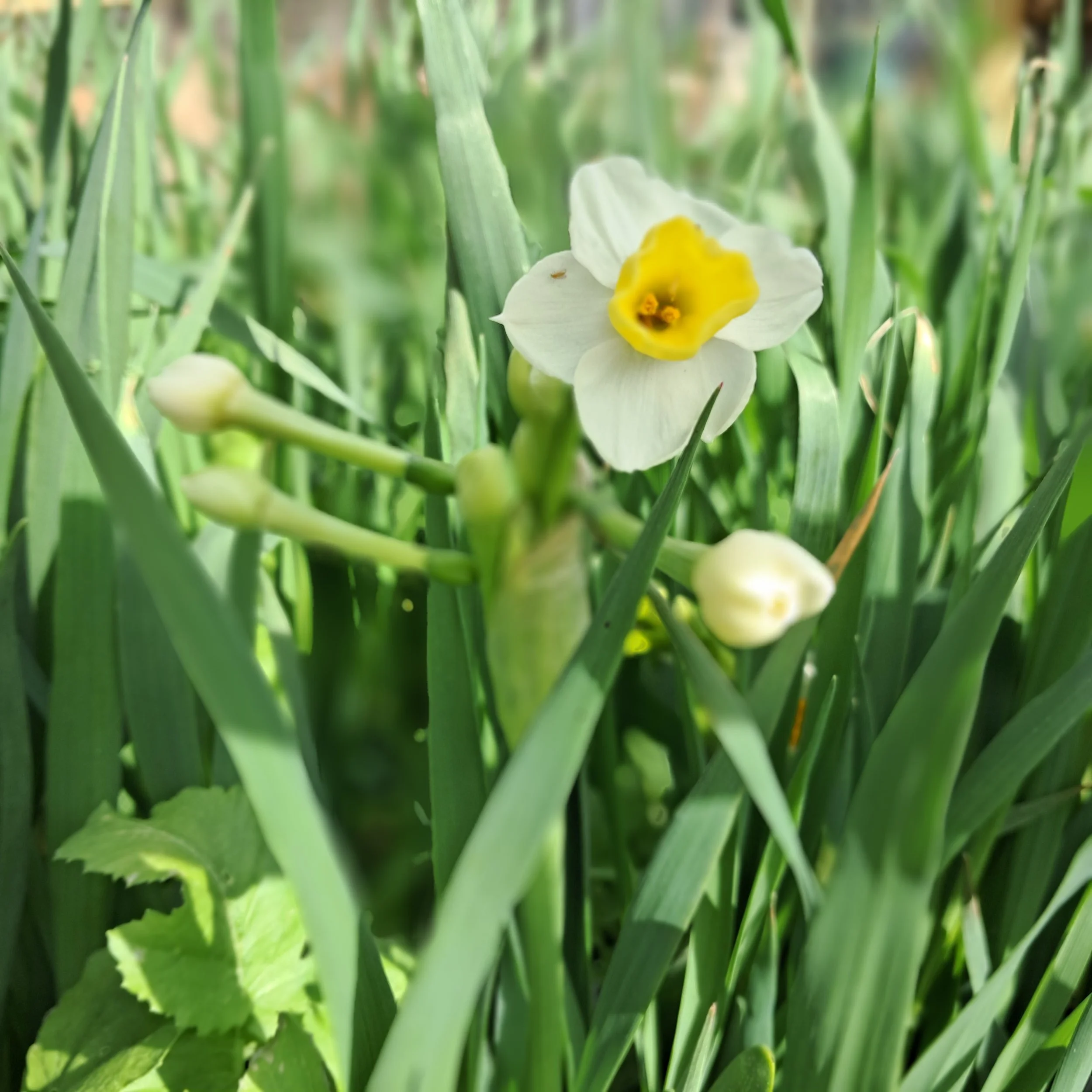
This is actually the perfect time to harvest this Kapiti Peach Daffodil. The other buds will open in the next day or so and the Daffodil will last 5-7 days in a vase.
Harvesting
Harvest Daffodils for cut flowers when the flowers are still in bud. This seems early, but I promise the flowers will emerge. Harvesting when the flowers are still in bud will greatly increase the vase life of the flowers. Daffodils harvested when flowers are open will last 2-3 days in a vase, those picked in bud will last 5-7 days.
To harvest Daffodils, grab the bottom of the stem with your hand and pull. Do not use scissors. The stem will break at the right place. Daffodils emit a sap that some people find irritating, so you may want to wear gloves when doing this. After harvesting, keep Daffodils in water containers that are separate from other cut flowers. Daffodils express a sap that is toxic to other types of flowers- but not to other types of Daffodils. Store them in the dark for a few hours to enable the flowers to rest and recharge from the trauma of being cut. After a few hours, once the sap has been expressed, Daffodils can be put in mixed arrangements with other flowers and foliage.
Care after blooming
No need to deadhead Daffodils, they have a tiny amount of nectar, do not tend to attract pollinators, and therefore rarely produce seeds. Instead, let the greens die back completely. The greens are absorbing sunlight to feed the bulb for next year’s blooms. Letting the greens die back can be unsightly, planting Daffodils amongst other perennials and annuals that emerge in April and May can disguise the dying foliage. This also means planting Daffodils where you won’t need to mow.
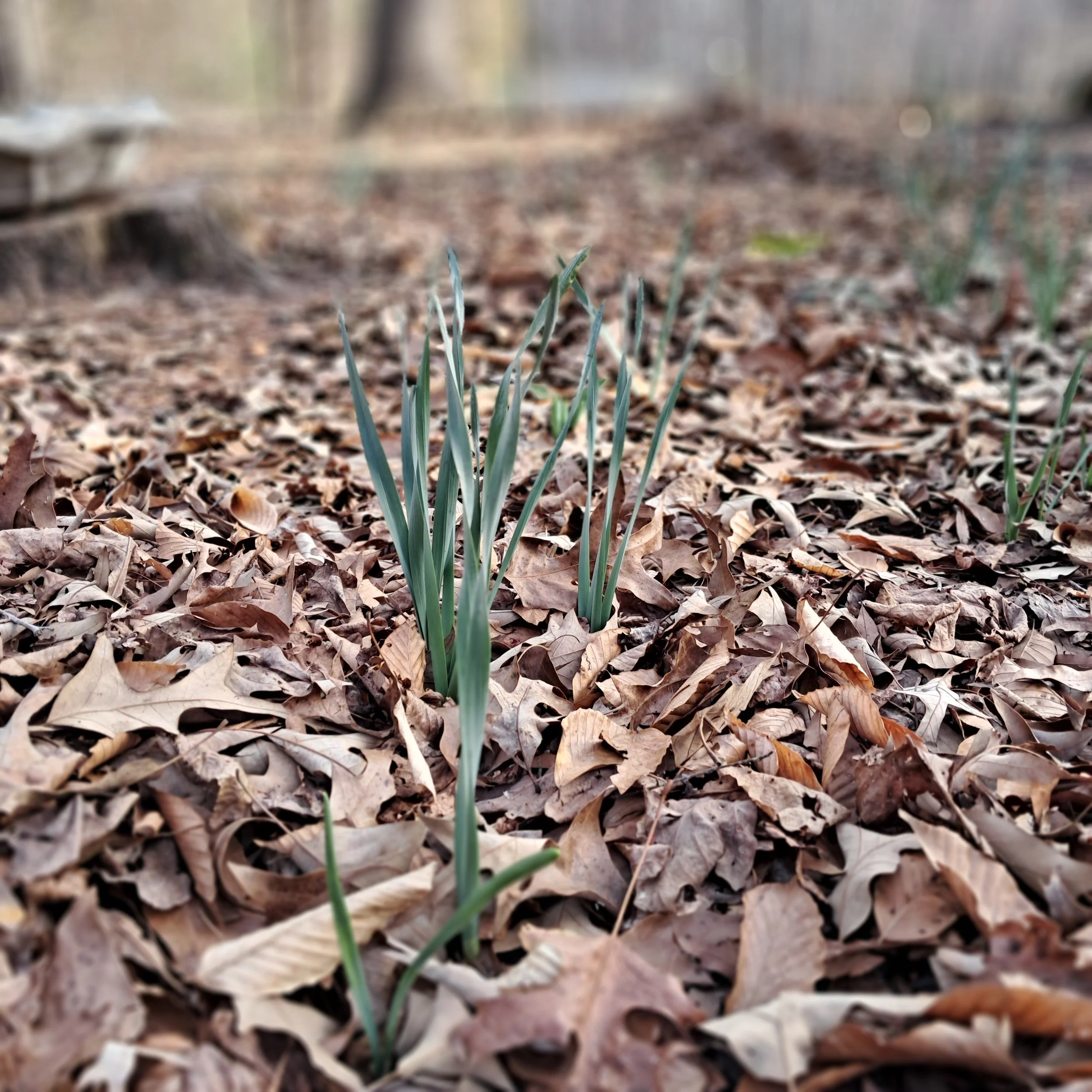
It is such a bummer when Daffodils send up foliage but no flower. But these bulbs can be saved! Tie a knot in one of the leaves to mark it and then dig it up when most of the foliage has died back.
Subsequent years
Daffodils readily perennialize and reproduce. That said, sometimes you’ll see your Daffodil bulbs just send up foliage with no flower bud. This can be really disappointing! Usually this is because the Daffodils aren’t getting enough sun.
Here’s what to do to save the bulb and get flowers the next year:
Once the foliage has died back significantly, dig up the bulb. At our house, we tie one leaf in a loose knot. That marks them for us, so its easy to tell which ones to dig up once the foliage has turned brown.
Discard Daffodil bulbs that are soft, rotten, or those you may have inadvertently cut in half. Save ones you have merely sliced.
Knock off any dirt and store in a dark, dry location through summer. We store ours in the garage.
Once September or October rolls around, replant them in a sunny location. We do this with our foliage-only Daffodils each year and usually at least half will send up flowers going forwards.