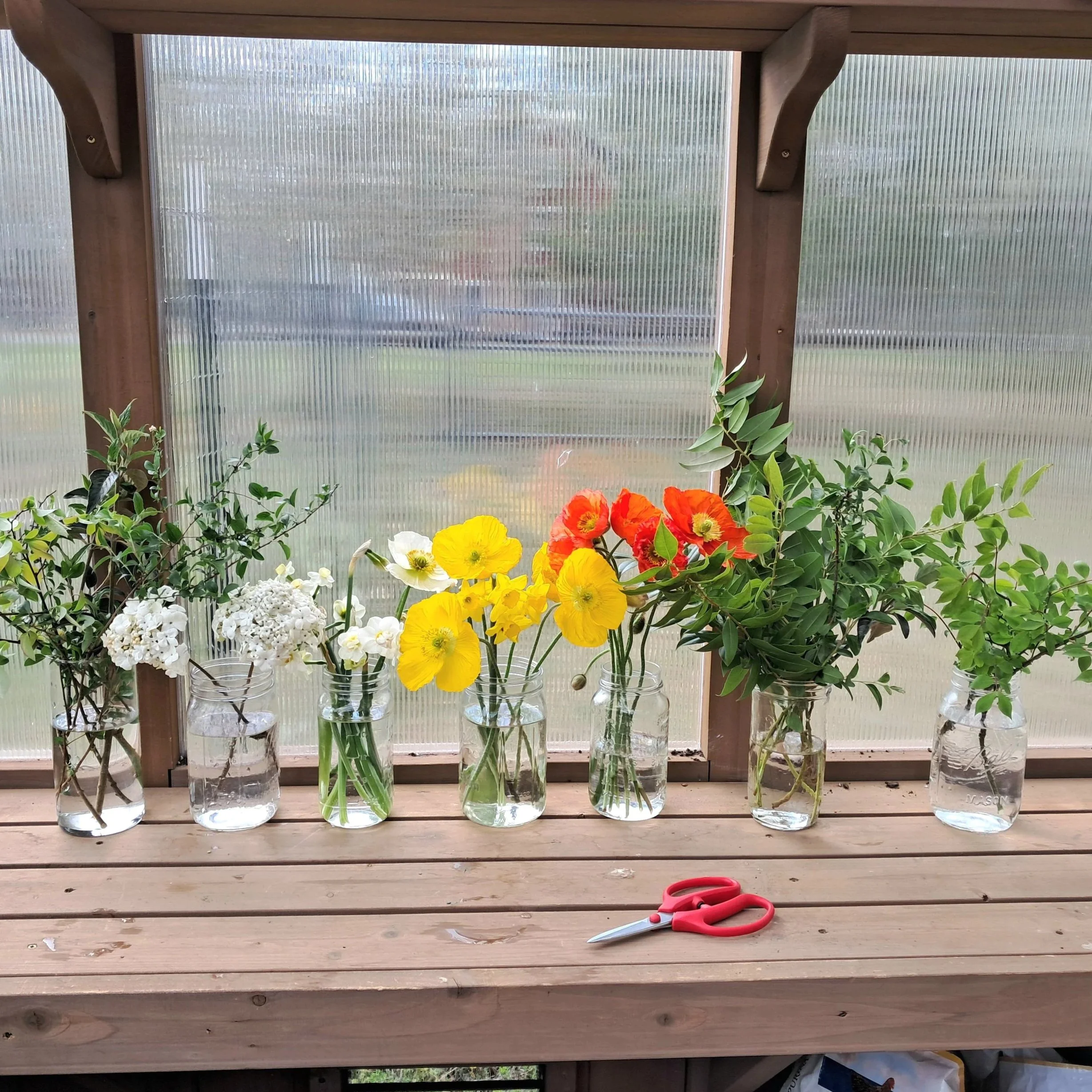
Yes, you can grow winter blooming Poppies!
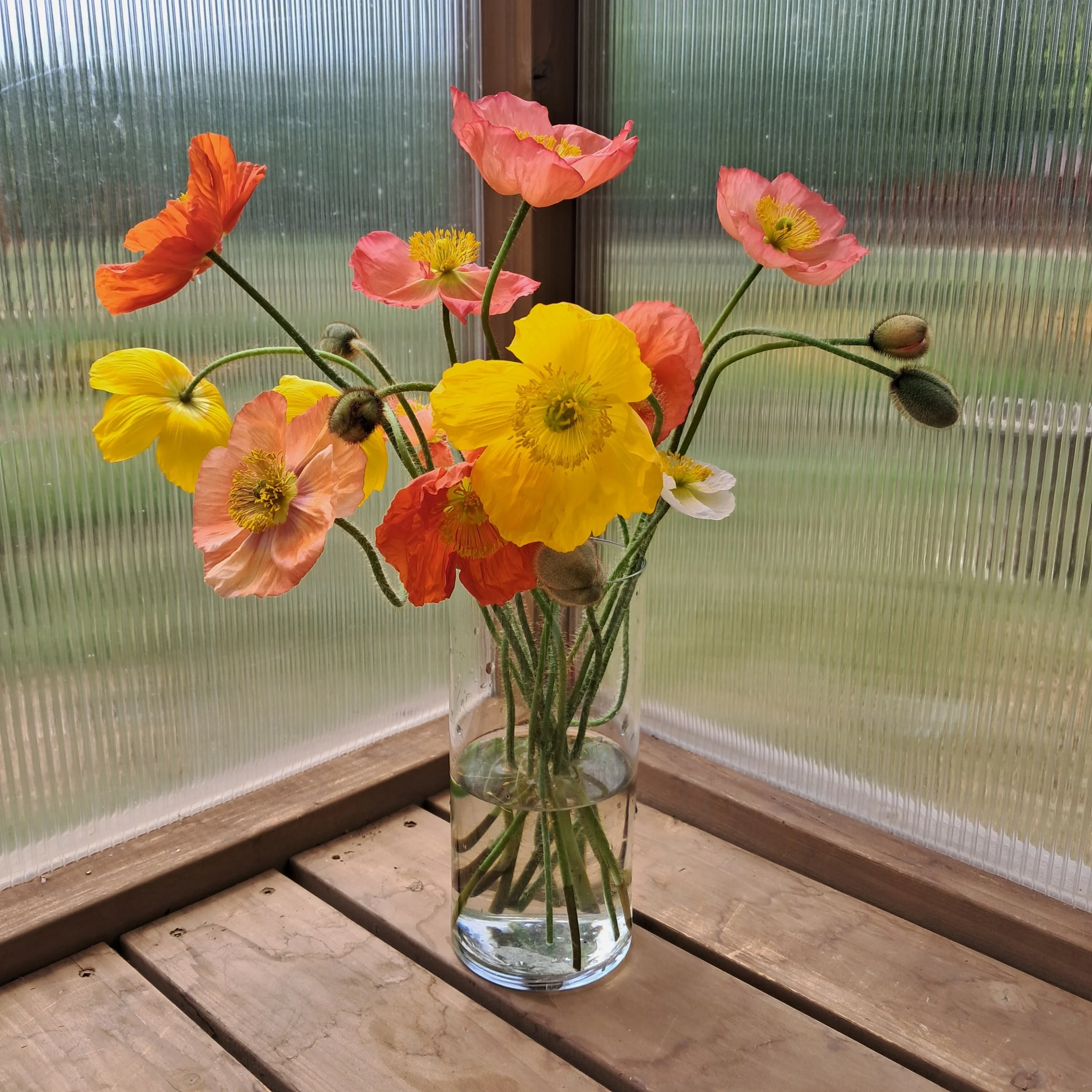
Iceland Poppies come in brilliant shades and have delicate crepe paper like petals. It is thrilling to see them blooming when it is still cold and dreary outside.
I get more questions about my Iceland Poppies than any other flower. People can’t believe they are real- and are even more surprised when I say that anyone can grow them. Growing Iceland Poppies successfully just means learning a few tricks.
They key thing to know is that Iceland Poppies can survive temperatures well below -15 degrees Farenheit but they don’t like temperatures over 70 degrees F.
Growing the successfully in Central North Carolina means maximizing our temperate Fall temperatures + warming them up in the winter as you are able.
Sowing Seeds:
Sow Iceland Poppy seeds in the Fall before you want blooms. Really. I know it seems silly to plant seeds in the Fall, but remember: Iceland Poppies survive temperatures way colder than we get here.
Sowing in Fall means the plants will get a head start on growing while the soil is still warm and days are relatively long.
When to sow? I recommend early -mid October. Seeds need temperatures between 65-75 degrees to germinate, so it still needs to be relatively warm during the day. I recommend picking a week when the day and night temperatures are between 55-70 and there is rain in the forecast.
Seeds can be planted directly in the garden (direct seed) and Poppies need full sun.
Pro tip: To extend the bloom window in Spring, plant them in a place where they will get full sun in Fall and Winter but start to get shade in in Spring so that they can remain cool. Behind your Daffodils and Tulips or other Spring blooming annuals is a great idea.
Growing on
Once your seeds have germinated in the garden, water them periodically, but generally leave them. Plants need temperatures over 45 degrees to grow. so you’ll see your Poppy plants grow slowly over late Fall and winter. On days or weeks it doesn’t get above 45 degrees, they will be dormant.
The seed packet says Iceland Poppies need 85-100 days from seed to flower, but remember this is growing days or days above 45 degrees. If the temperature is below 45 for two weeks, those days don’t count towards the 85-100 days.
Winter Weather
Poppies can survive extreme temperatures, but I recommend covering them if there will be winter weather- especially ice. You can build a simple cold frame and cover it with frost cloth or just use frost cloth and simple weights if bad weather is predicted. Benefits to actual frost cloth (rather than a sheet or blanket) are that the frost cloth lets in water, 85% of the sunlight, and raises the temperature 10-15 degrees.
At our place, we left the frost cloth in place during January and February, which meant the Poppies got more days above 45 degrees and grew on a little faster than they would have without the cloth.
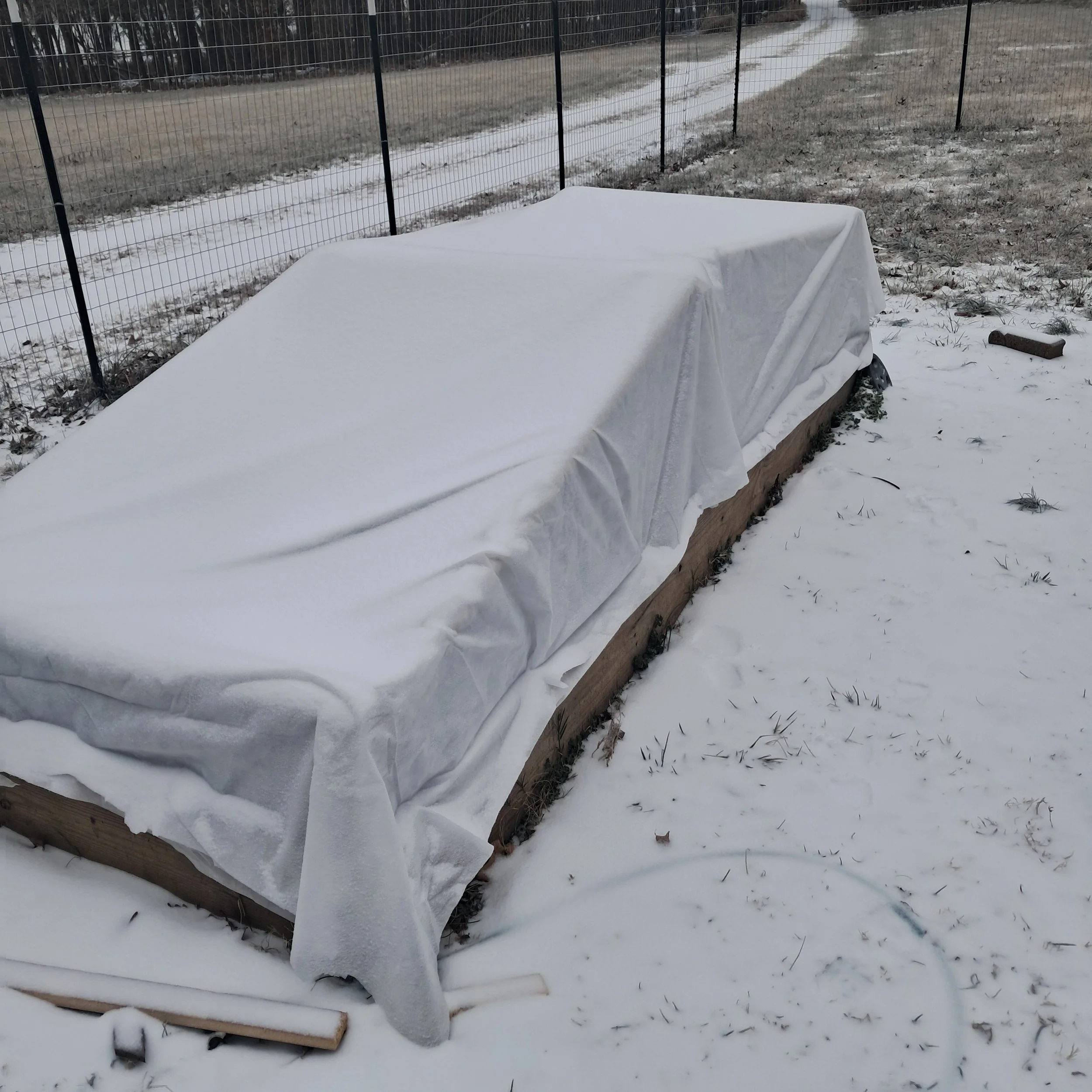
Cozy Poppies under a blanket of snow.
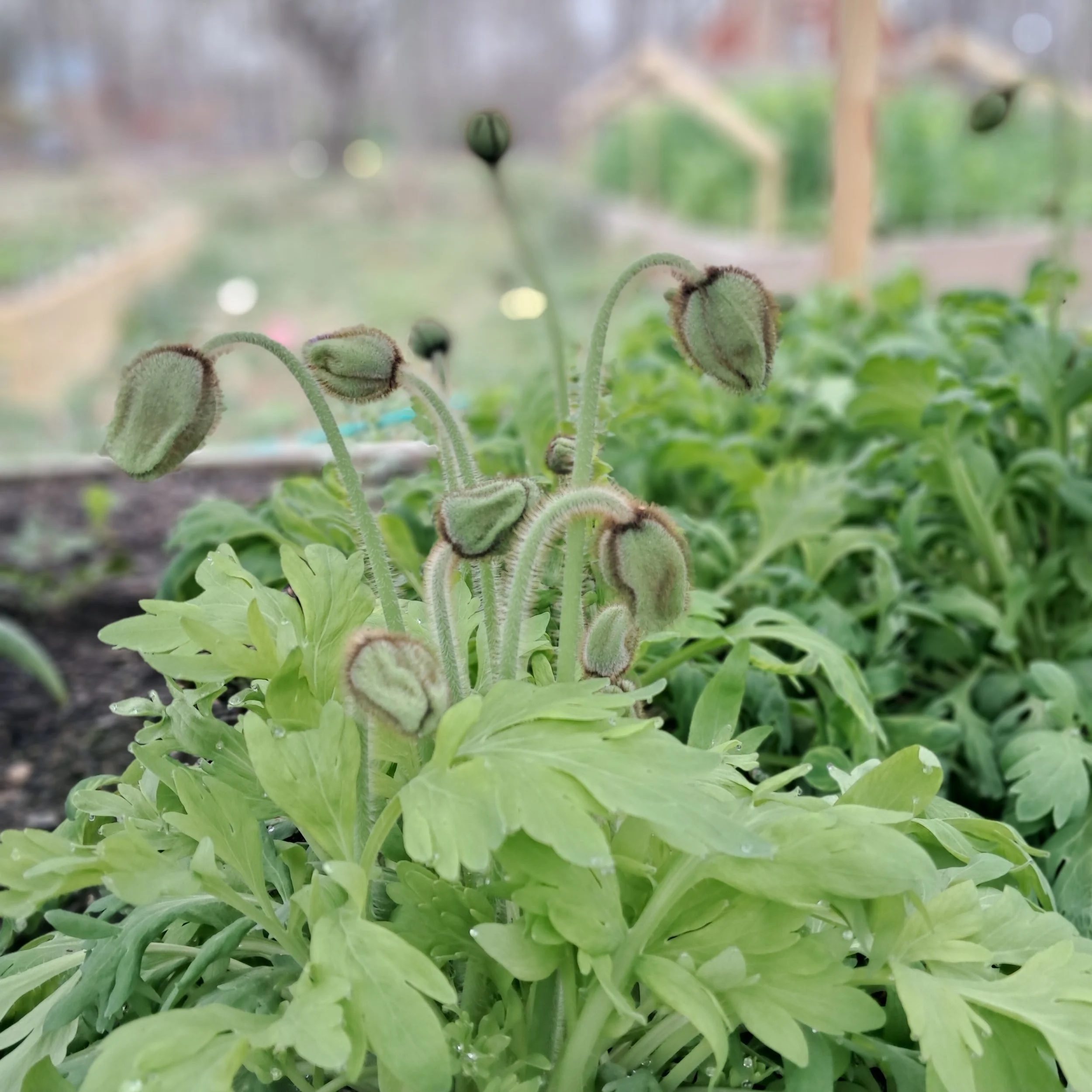
Poppy buds in Early March, after removing the frost cloth
Blooming and Harvesting
Once the temperatures are getting over 45 degrees regularly, your Poppies will grow quickly! As you are able, harvest them once their green bud has cracked and you can see what color they will be, but before they are in full bloom. Poppies are very delicate once blooming, harvesting them still in bud means they will be stronger and have a longer vase life.
Shortly after harvesting, put the bottom 1-2 inches of stem in boiling hot water for 5-10 seconds to increase vase life.
Lengthening Harvest Window
The challenging part of Iceland Poppies is the relatively small temperature range in which they thrive, about 50-70 degrees. The key to success with these plants is to figure out how you can maximize the time they have in that window.
At our place, that meant using a cold frame and frost cloth to increase the temperature during the winter. It also meant providing shade during Early Spring.
After we removed the frost cloth in February, we still had the cold frame structure in place. On hot days, I put wooden boards on the structure to give the Poppies shade. This + taking advantage of shade provided by other plants (in our case Bells of Ireland) meant our Poppy season lasted more than 2 months! This is much longer than the growers at the Durham Farmers Market- and we are growing without a high tunnel.
So much of gardening is about problem solving- understanding what the plants need to thrive and how to manipulate your landscape to do that.